Craft, Care, and Intention: How Serious Practitioners Are Rethinking the Tools They Bring to the Scene
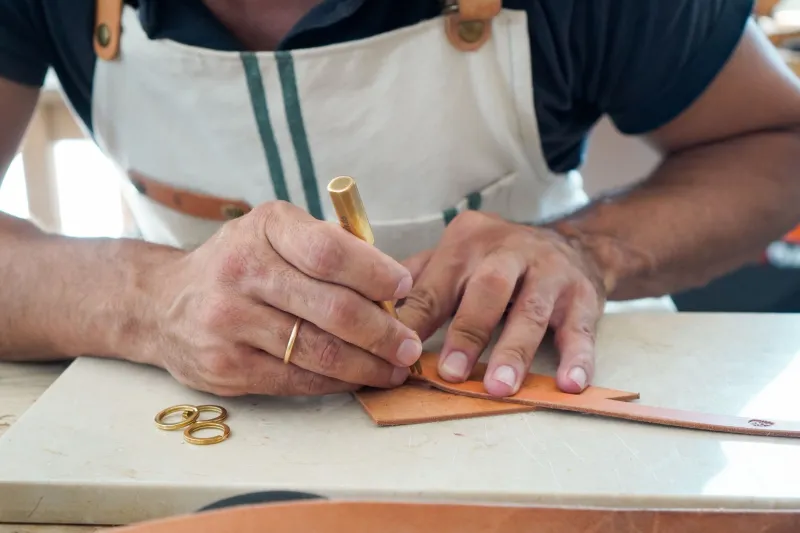
There's a moment most experienced spanking enthusiasts recognize — the one where you pick up a cheaply made paddle, feel how unbalanced it is in your hand, and think: there has to be something better than this. For a lot of people in the US kink community, that moment has become a turning point. Not just a preference shift, but a genuine philosophical one. The implement isn't just a prop. It's part of the experience itself.
And the market has responded accordingly.
Over the past decade or so, a quiet renaissance has been happening in the world of spanking equipment. Small-batch leather workers in places like Portland and Austin, woodturners in the rural Midwest, and boutique BDSM studios in cities like New York and Los Angeles have all started producing implements that are, frankly, works of craft. We're talking about hand-stitched leather straps with beveled edges, solid hardwood paddles finished in food-safe oils, and custom-order pieces built to a buyer's exact weight, flex, and grip specifications.
So what's actually going on here, and why does it matter?
The Psychology of Investing in Quality Gear
Let's start with the obvious question: does the implement actually change the experience, or is this just fancy gear-head territory?
The honest answer is both, and that's not a contradiction.
From a purely physical standpoint, the quality of an implement absolutely affects what happens during a scene. A well-balanced leather strap delivers sensation with more control and consistency than a floppy, unevenly cut piece of cheap hide. A properly weighted wooden paddle — one where the maker has thought about the density of the wood and the thickness of the striking surface — transmits impact in a way that feels intentional rather than random. For tops especially, that control matters enormously. It's the difference between executing a scene with precision and just kind of hoping for the best.
But there's also something psychological happening when you invest in a quality piece. Practitioners who've made the jump from mass-market to artisanal equipment often describe a shift in how they approach scenes overall. The implement becomes an object with meaning. It gets maintained, stored carefully, maybe even named. That ritualistic relationship with the tool translates directly into the headspace of the scene — for both parties.
Think of it like the difference between cooking with a $12 knife from a big-box store and using a well-made chef's knife that fits your hand. The food might technically get cut either way, but the experience of cooking changes. Your attention changes. Your relationship to the process changes.
What Separates Artisanal from Mass-Market
If you've spent any time browsing mainstream adult novelty sites, you've seen the generic paddle lineup: injection-molded plastic, thin pleather, maybe a novelty design stamped on the face. These pieces are built to a price point, and it shows. They're often poorly balanced, uncomfortable to grip for extended use, and they degrade quickly.
Artisanal makers approach the work differently from the ground up.
Leather work is probably the most developed segment of the premium market. Quality leather implements — straps, tawses, and belts — are typically made from vegetable-tanned hides, which behave differently than chrome-tanned leather. Veg-tan leather stiffens and softens predictably, develops a patina with use, and can be conditioned to maintain its properties over years. The stitching on a quality strap is usually saddle stitching rather than machine stitching, which means it won't unravel from a single broken thread. Edge finishing — beveling, burnishing, or binding — affects both aesthetics and how the implement feels against skin.
Wood implements have their own craft tradition. Makers who specialize in paddles often talk about wood selection the way luthiers talk about tonewood — each species has different density, grain, and flex characteristics that translate into distinct sensation profiles. Cherry is a popular choice for its moderate density and beautiful finish. Bloodwood and purpleheart are denser options for those who want a heavier, thudier impact. Some makers offer paddle faces drilled with hole patterns, which reduces air resistance and changes the sound and sting of each stroke.
Then there's the growing category of hybrid and custom pieces — implements that combine materials in ways mass producers simply can't. A leather-wrapped wooden handle with a precisely weighted striking head. A silicone-core strap with a leather outer. Custom color work, monogramming, and even matched sets designed to be displayed as well as used.
Collectors, Connoisseurs, and the Aesthetic Dimension
Here's something that might surprise people outside the community: a meaningful subset of serious practitioners are also collectors. They acquire pieces not just for use but for the craftsmanship itself, the way someone might collect handmade knives or artisan ceramics.
This isn't as unusual as it sounds. Human beings have always imbued functional objects with aesthetic value — especially objects associated with ritual, power, or intimacy. The implements used in spanking play occupy all three of those categories simultaneously. It makes sense that people would want those objects to be beautiful.
For collectors, the appeal often lies in the intersection of form and function. A paddle that looks stunning mounted on a wall but also performs exactly as intended during a scene hits a particular sweet spot. Several American makers have leaned into this, producing pieces with inlaid wood patterns, hand-tooled leather surfaces, or custom hardware that elevates the implement to something you'd genuinely want to display.
How to Think About Your First Serious Upgrade
If you're ready to move beyond the basics, the learning curve is real but manageable. A few principles worth keeping in mind:
Start with what you actually use. If you reach for a strap more than anything else, invest there first. A quality piece in your preferred implement type will teach you more about what you want than a collection of mediocre options.
Consider sensation profile before aesthetics. It's easy to fall for a beautiful piece that doesn't actually match how you play. Heavier implements suit different scenes than lighter ones. Stiff leather behaves differently than supple. Ask makers questions — good ones will talk through this with you.
Budget for maintenance. Leather needs conditioning. Wood benefits from occasional oiling. Quality implements last for years or even decades with basic care, but they do require attention.
Buy from makers who are part of the community. The best American artisans in this space tend to be practitioners themselves, or at minimum deeply familiar with how their products are used. That insider knowledge shows in the finished product.
The equipment renaissance isn't really about spending money for its own sake. It's about bringing the same intentionality to your tools that you (hopefully) bring to everything else about how you play. The right implement, in the right hands, for the right scene — that's where craft and desire meet. And that intersection is worth taking seriously.